2026-11-20 00:00:00Z
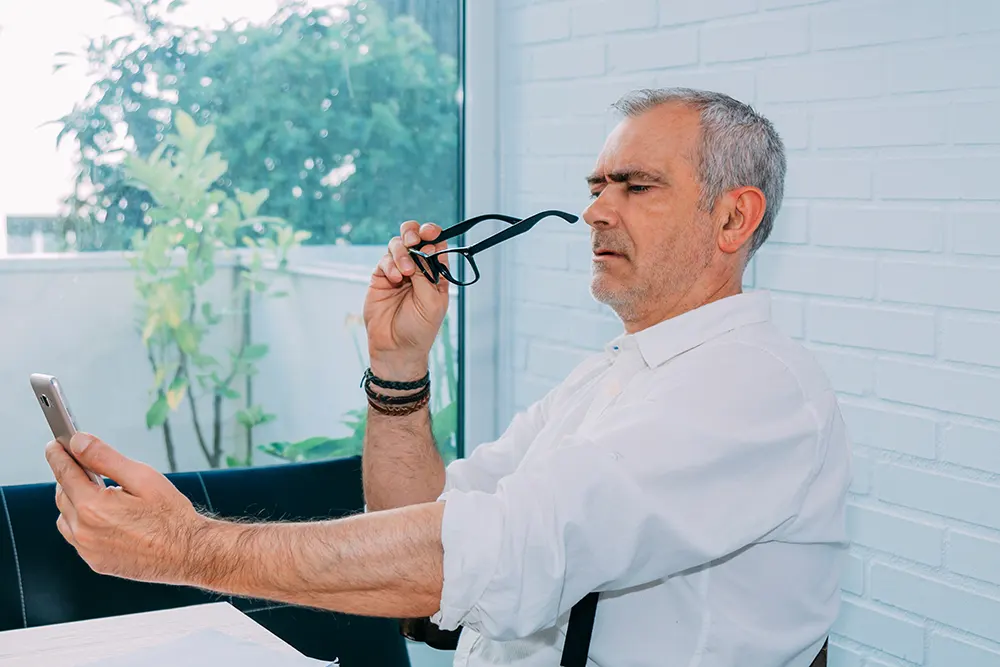
Have you noticed that reading small print has become more difficult or that you need to hold your phone farther away to see the words clearly? These changes may be early signs of presbyopia, a common age-related vision condition that affects the ability to focus on nearby objects.
Presbyopia is a natural part of aging and typically becomes noticeable during the early to mid-40s. Understanding when it develops, what symptoms to watch for, and which vision correction options are available can help you maintain clear and comfortable vision as you get older.
Presbyopia usually begins around age 40 to 45, although the exact timing varies from person to person. It occurs because the eye's natural lens gradually becomes less flexible with age.
When you're younger, the lens can easily change shape to focus on objects at different distances. As it becomes less flexible, focusing on nearby objects becomes increasingly difficult.
By the time people reach their late 40s or early 50s, presbyopia symptoms may become more noticeable, particularly when reading, using a smartphone, or performing close-up tasks.
Presbyopia often develops gradually, so some people may initially mistake its symptoms for ordinary eye fatigue. Common signs include:
If you experience these changes, scheduling an eye examination can help determine whether presbyopia or another vision condition is responsible.
Unlike some vision problems caused by the shape of the eye, presbyopia is primarily associated with natural changes in the eye's lens.
As the lens gradually hardens and loses flexibility, it becomes less capable of adjusting its shape to focus on nearby objects. This makes close-up vision increasingly difficult, even for people who have never needed glasses before.
Presbyopia is a normal age-related change and is not considered a disease. However, its symptoms can affect everyday activities if left uncorrected.
Although presbyopia cannot be prevented or reversed through eye exercises, several vision correction options can help improve near vision.
Depending on your prescription, lifestyle, and visual needs, your optometrist may recommend:
The best option depends on your individual eye health, prescription, and daily activities.
Not every change in near vision is caused by presbyopia. Other age-related conditions, including cataracts, glaucoma, and macular degeneration, can also affect vision.
Comprehensive eye examinations help identify changes in your eyesight, assess overall eye health, and determine whether an updated prescription or additional care is needed.
Even if you already wear glasses or contact lenses, regular examinations are important as your vision continues to change with age.
Presbyopia is a natural part of getting older, but it doesn't mean you have to struggle with everyday activities that require clear near vision. Recognizing the early symptoms and exploring appropriate corrective options can make reading, working, and enjoying your favorite activities more comfortable.
At VisualEyes Optometrists, patients can receive professional eye care and guidance on vision correction options suited to their individual needs. Whether you're experiencing difficulty reading small print or noticing other changes in your eyesight, a comprehensive eye examination can help determine the right approach.
Schedule an appointment with VisualEyes Optometrists to have your vision evaluated and keep your eyes healthy through every stage of life.
5876 Kingstowne Center Alexandria, VA 22315
Visit Website Make Appointment4018 Campbell Avenue Arlington, VA 22206
Visit Website Make Appointment9600 H. Main Street Fairfax, VA 22031
Visit Website Make Appointment1 South Rotary Road, STE 2C113
Arlington VA 22202
(For Authorized Pentagon Personnel Only)
Copyright 2026 VisualEyes Optometry. All rights reserved. Website Designed and Maintained by WSI Pro Marketing.