
2026-09-30 00:00:00Z
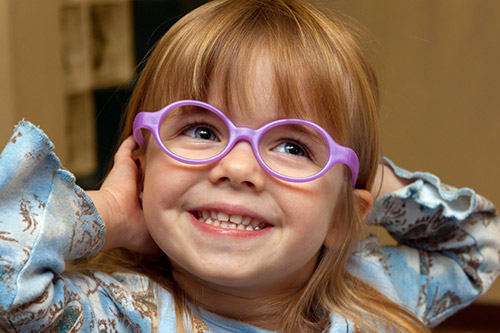
If your child can see nearby objects clearly but has trouble seeing things that are farther away, they may have nearsightedness, also called myopia. Myopia is common in children and can develop or progress as the eyes grow.
The good news is that there are several ways to improve a child's vision and, in some cases, help slow the progression of myopia. The right approach depends on your child's age, prescription, eye health, and how quickly their myopia is changing.
Nearsightedness occurs when the eye focuses incoming light in front of the retina instead of directly on it. As a result, distant objects may appear blurry while objects nearby can remain clearer.
Children may not always realize that their vision is blurry because they can adapt to gradual changes. Parents may notice signs such as squinting, sitting closer to the television, holding books very close, or having difficulty seeing the board at school.
A comprehensive eye examination is the best way to determine whether a child has myopia.
Eyeglasses are one of the most common ways to correct myopia in children. Prescription lenses help focus light properly so that distant objects appear clearer.
Children's prescriptions can change as they grow, so regular eye examinations are important for monitoring vision.
Depending on their age, maturity, eye health, and ability to follow proper lens-care instructions, some children may be candidates for contact lenses. Contact lenses can provide clear vision without glasses, but proper hygiene and responsible lens care are essential.
Correcting blurry vision is important, but children's eye care may also involve myopia management. Certain specialized treatments and lenses may help slow the progression of myopia in appropriate children. Options can include specially designed spectacle lenses, certain contact lenses, and other approaches recommended by an eye-care professional. Because not every treatment is appropriate for every child, an optometrist should evaluate the child's eyes and prescription before recommending a myopia-management strategy.
Daily habits can also play a role in supporting children's eye health. Encourage children to spend time outdoors and take regular breaks from close-up activities such as reading, homework, gaming, and using digital devices. The goal isn't necessarily to eliminate screen time but to encourage a healthy balance between near work, outdoor activity, and rest.
A child's vision can change as they grow, and myopia may progress over time. Regular comprehensive eye examinations allow an optometrist to monitor changes in prescription and eye health. Early identification is particularly helpful because it gives parents and eye-care professionals an opportunity to discuss appropriate options before myopia progresses further.
If your child has been diagnosed with nearsightedness, there is no single solution that works for every child. Eyeglasses, contact lenses, and myopia-management options may all have a role depending on the individual situation.
At VisualEyes Optometrists, children's vision is evaluated with their age, eye health, prescription, and visual needs in mind. If you're concerned that your child may be struggling to see clearly, scheduling a comprehensive eye examination is a good place to start.
Clear vision can make a difference in how children learn, play, and participate in everyday activities. If you notice signs of nearsightedness, don't wait for your child to simply adapt—have their vision evaluated by an eye-care professional.
5876 Kingstowne Center Alexandria, VA 22315
Visit Website Make Appointment4018 Campbell Avenue Arlington, VA 22206
Visit Website Make Appointment9600 H. Main Street Fairfax, VA 22031
Visit Website Make Appointment1 South Rotary Road, STE 2C113
Arlington VA 22202
(For Authorized Pentagon Personnel Only)
Copyright 2026 VisualEyes Optometry. All rights reserved. Website Designed and Maintained by WSI Pro Marketing.